
Selling a House With Foundation Problems in Washington: Repair, Credit, or Sell As-Is?

Can you sell a house with foundation problems in Washington?
Yes. You can sell a house with foundation problems in Washington as long as you disclose what you know on the Form 17 Seller Disclosure Statement, ideally with a structural engineer's report in hand. Most sellers choose one of three paths: repair before listing, credit or discount the buyer after inspection, or sell as-is to a renovation or cash buyer. The right one depends on what the engineer finds, because many foundation "problems" turn out to be cosmetic and a smaller group are serious enough to change who can buy your home.

Step one: find out if it is actually structural
When a buyer's inspector writes "foundation concerns" on a report, most sellers picture a six-figure disaster. Often it isn't. One national seller guide notes that roughly 90% of cracks and settling are not structural, and that hairline cracks, grout cracks, and nail pops are usually false alarms. The only way to know is a licensed structural engineer, not a contractor offering a free estimate (who profits if the answer is "big job").
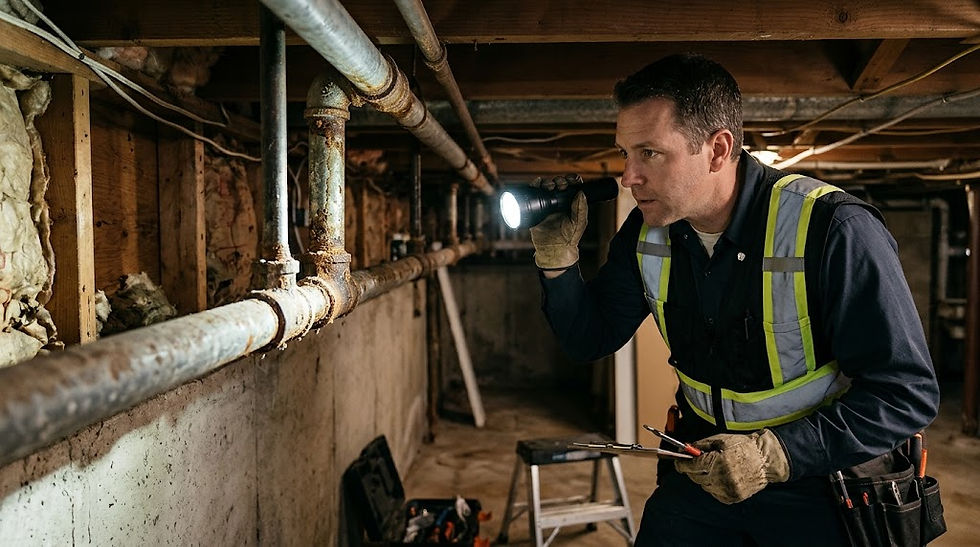
In the Seattle area an engineer's evaluation commonly runs about $300 to $800 for the inspection and report. That report should answer three questions: what is happening, how serious it is, and what fix is prescribed. For a Shoreline seller, it is the cheapest piece of leverage you can buy.
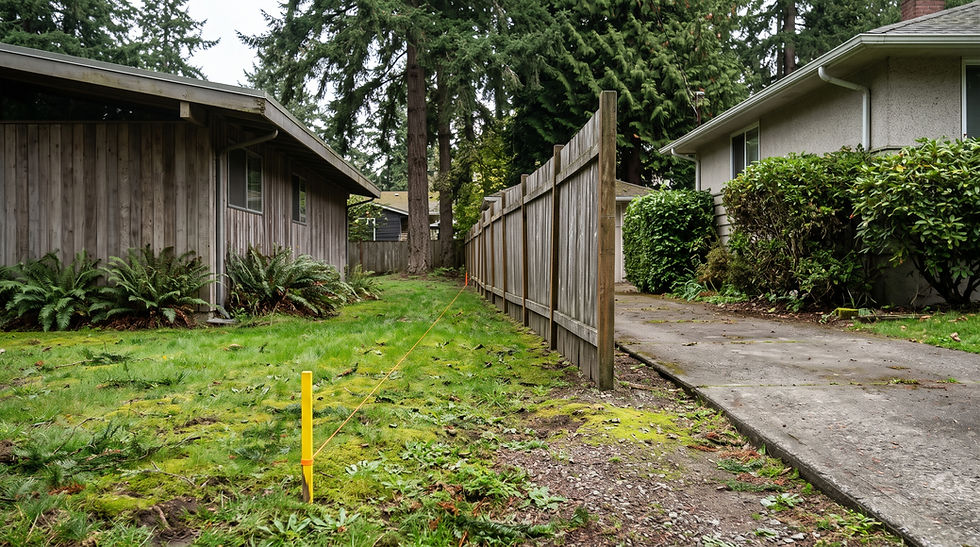
Why does this come up so often here? Much of Shoreline, Edmonds, Mountlake Terrace, and North Seattle is older housing on sloped lots and glacial soils, with crawl spaces, daylight basements, and unbolted or under-braced cripple walls. A seismic bolt-down or cripple wall bracing is a very common finding in older homes, and it is a very different conversation than a sinking footing.
What you have to disclose on Form 17
Washington sellers of single-family homes complete the Form 17 and disclose what they actually know. The form asks about structural defects, settling or slippage, and water intrusion in the crawl space or basement. Knowing about a crack, a sticking door line, or a prior repair and answering "no" is where sellers get into trouble. Disclosed, a foundation issue is a negotiation item. Concealed and discovered later, it is a potential lawsuit. (Our Form 17 guide walks through the "actual knowledge" standard and the buyer's rescission rights.)
Two practical rules. First, don't cosmetically patch a crack before listing. Fresh patching over a known issue reads as concealment. Second, if you learn something new after you deliver the form, such as an engineer's finding mid-escrow, Washington requires you to amend the disclosure, and that can reopen the buyer's right to rescind. Getting the report before you list avoids that surprise.
Your three paths, with real numbers
Repair before listing. This makes sense when the fix is moderate and the engineer's scope is clear. Typical Washington ranges from one 2026 cost guide: seismic bolt-down $3,500 to $7,500, cripple wall bracing $4,000 to $10,000, helical piers $1,200 to $2,500 each, and serious structural work reaching $14,000 to $35,000 or more. Repairing restores access to mainstream buyers and their financing, and a permitted repair with engineer sign-off becomes a selling point instead of a mystery.
Sell with a credit or price adjustment. List the home with the engineer's report and two contractor bids attached. Buyers price a known number far less harshly than an unknown one. National guidance suggests unresolved foundation problems can discount a home by roughly 10 to 15 percent, which is why "bids beat mysteries." See also our guide on deciding between selling as-is and fixing first.
Sell as-is to a renovation or cash buyer. For severe movement, active water intrusion, or a seller who cannot front repair costs, investors and renovation-loan buyers can close faster and skip lender requirements. You trade price for speed and certainty.
Financing is the quiet deal-breaker. FHA, VA, and USDA loans have strict condition requirements, and an appraiser who flags structural deficiencies can require repairs before closing. If your home sits at the lower end of the $500,000 to $1,500,000 range where those loans are common, an unresolved issue can shrink your buyer pool dramatically.
How to decide: compare your net, not your fear
Here is a simple illustration, not a quote. Say your home would sell for about $900,000 if sound. A 10 to 15 percent discount is $90,000 to $135,000. If the engineer prescribes a $20,000 permitted repair, fixing it first (or crediting it) is likely far cheaper than leaving the unknown to the market. If instead the engineer says it is a $6,000 bolt-down and bracing job, a small credit may be all you need. And if the fix is truly large and your equity is thin, the as-is route may net more than a long, contested sale.
Run the three scenarios side by side: net after repair and carrying costs, net after credit, and net as-is, subtracting the Real Estate Excise Tax (REET) and commission in each. Then pick based on timeline and risk tolerance as much as dollars.
If the buyer's inspector finds it after you accept an offer
This is the most common way sellers meet the problem. The buyer sends a repair request or inspection response, and you generally have four moves: repair, credit, price reduction, or decline. Having your own engineer's report already in hand keeps you from negotiating against a scary line in a generalist inspector's report. If the appraisal is affected, see what to do when an appraisal comes in low. And if the issue involves unpermitted work or an old addition, read our post on selling with unpermitted work first.
Frequently asked questions
Do I have to fix foundation problems before selling in Washington?
No. Washington does not require repairs before sale, but you must disclose known defects on Form 17. Whether to fix is a pricing and financing decision, not a legal requirement.
How much does a structural engineer cost for a home sale?
Around $300 to $800 for an inspection and written report in the Seattle area, per a 2026 Washington cost guide. It is usually worth it before you list.
Will a foundation problem stop a buyer from getting a loan?
It can. Government-backed loans like FHA and VA are strict about structural condition, and appraisers can require repairs. Conventional lenders may also want documentation. A permitted repair with engineer sign-off usually resolves it.
Is a crack in my foundation always serious?
No. Hairline and shrinkage cracks are common. Horizontal cracks, stair-step cracks in block, bowing walls, or doors and windows that suddenly stick warrant a structural engineer's look.
Can I sell to a cash buyer instead?
Yes. Cash and renovation buyers don't depend on lender appraisal rules, which makes closing easier, but expect a discount for that certainty.
The bottom line
A foundation problem is a pricing problem and a disclosure problem, not the end of your sale. Get the engineer's report, disclose honestly, and compare your three paths on a net-proceeds basis. If you are weighing this for a home in Shoreline or the surrounding Seattle area, I'm happy to look at your report and map out your options.

About the author
Samantha Schlegel is a residential listing specialist serving Shoreline and the greater Seattle area, with a focus on sellers navigating complex situations like probate, inherited homes, divorce, and relocation. She works with Compass Real Estate and is known for guiding clients through tough transitions with clarity and care. This article is general information, not legal, tax, or engineering advice.

Comments